Case study: We put Perfectly Clear up against original photos — 96% preferred it
2 Jun 2026Kayla Chang2 min read
- Learn
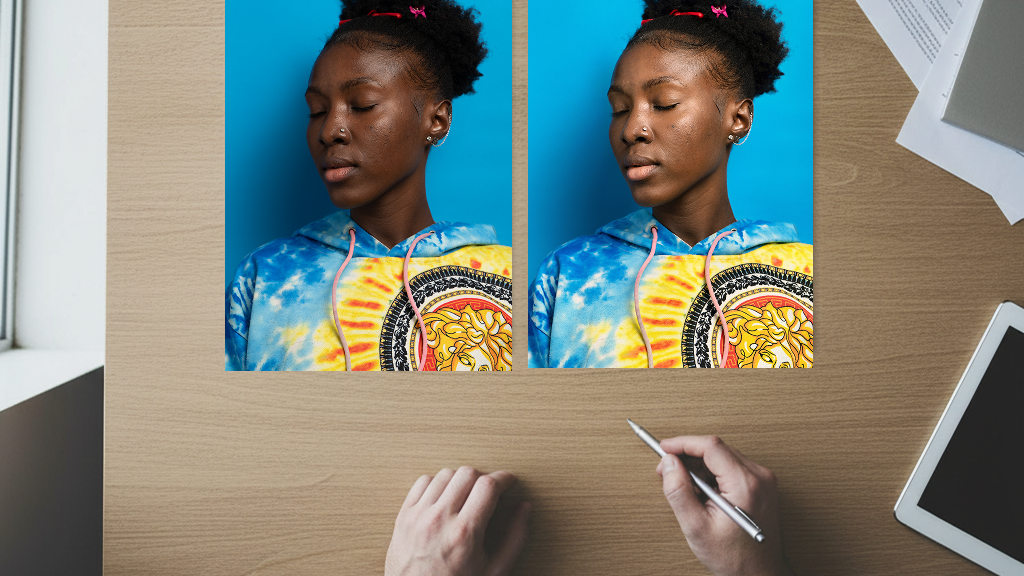
Case study: We put Perfectly Clear up against original photos — 96% preferred it
When customers see the original and Perfectly Clear,
they choose Perfectly Clear.
A prospect challenged us to prove that end users actually prefer corrected images. We ran an independent 4,000-person study to find out. The results were unambiguous.
The challenge
“We’re not sure our customers would prefer a corrected image.”
A prospective customer posed this question to our team. Rather than assert an answer, we designed a controlled study to let the data speak. This document summarizes the methodology and findings.
Key findings
96%
Preferred Perfectly Clear over the original unedited image
98%
Preferred Perfectly Clear over a competitor
Just for fun and validation, we put ourselves up against a competitor. Even against a dedicated competitor, preference for Perfectly Clear held — and improved.
4,000
Participants across both blind A/B tests, conducted over the web
Study methodology
Format
Blind blink test
Participants saw both images simultaneously, with no branding or labeling.
Sample size
4,000 participants
conducted over the web
Image types
Portraits, group photos, landscapes and products
Demonstrating the real variety and robustness for different photo types.
Why this matters
The study was conducted in response to a real sales objection — not as a marketing exercise. The methodology mirrors how real customers encounter images: a fast, side-by-side visual judgment with no brand context. That’s the closest proxy to a real purchase decision.
What 96%-98% means in practice
At this preference rate, the expected lift in image-driven conversion is substantial.
Even a 1–2% improvement in conversion on high-volume catalogs compounds quickly into measurable revenue impact.
Bottom line
Across 4,000 unbiased participants, end users chose Perfectly Clear over an uncorrected image 96% of the time — and over a competitor 98% of the time. The data suggests that the question isn’t whether your customers will prefer corrected images. It’s whether you can afford not to offer them.

